
Selling as Sharing
On Invisible Labor, Skepticism, and the Transaction of "Being Seen"

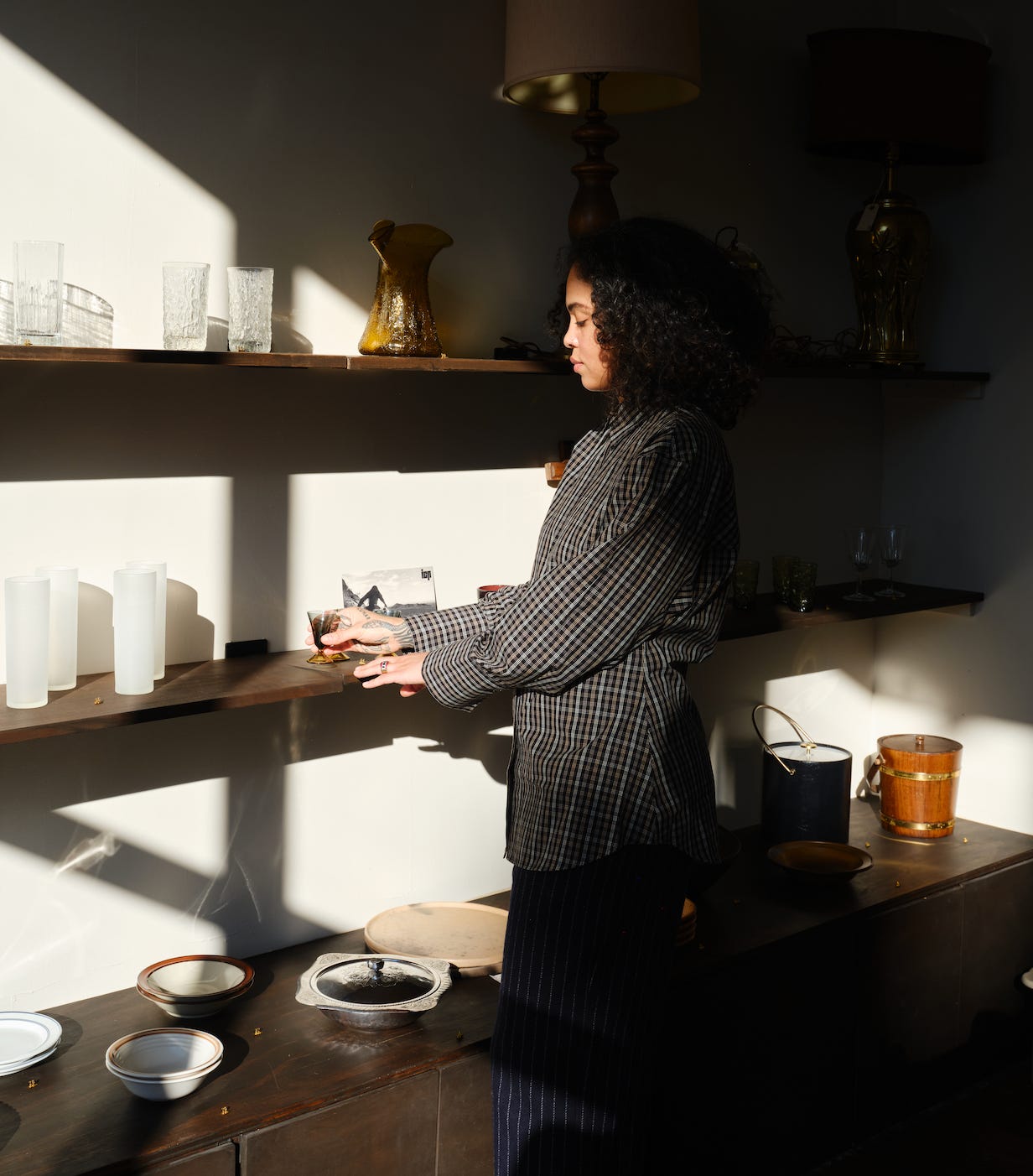
Yesterday I read a new piece by fellow writer Cody Cook-Parrott about the function of selling, about how they are always doing it, whether or not they are actively writing a sales email that day. I thought about it all day while I was making my gluten-free, nut-butter toast, playing tennis, and working at my shop. Because when I sit with my own relationship to selling, the word that keeps surfacing for me isn’t actually selling. It’s sharing.
My Instagram and site don’t actually sell anything. It's distributing information with the purpose of building trust: pages about each of my current projects offerings, a place to go see what I'm making and decide if you trust me enough to book with me / pass it along / buy my offerings somewhere else that they’re offered for purchase. It shares about my book, and a special video created by MALA Forever in 2023 for the launch. It shares about my shop Again Vintage, where you can walk in and hold an object that already had a whole life before it found you, and about SUBLIME, the cafe inside our shop, where you can experience something that feels both restorative for your gut and also tastes delicious (actually quite a small venn diagram in New York). It shares about the coaching and consulting I offer, both corporate and also one-on-one, for people trying to figure out their own version of this. It shares about my upcoming and past events, so you can see the type of things I like to work on and talk about with other writers / entrepreneurs / creators / Visible Sharers. And every so often it shares a new brand collaboration too, a company paying me to say true things about products I'd likely talk about anyway. Different buckets under one name, a portfolio more than a storefront.
I do also have a free resources list tucked in there, things I give away with nothing asked in return. And even though my website isn’t set up so that someone can actively buy something on it, it’s also true that we live in a capitalist society, and my site reflects that back to me: it wouldn’t really make sense, in the SocialLogic we’re all swimming in, for most of what I share to just be doodles and notes with nothing for sale attached. Even my Substack, which does share my thoughts and musings, has an option for a paid subscription. When you want to buy something from someone, you go to their website first, not to buy directly most of the time, but to see the links, the credibility, the portfolio of work that tells you they’re for real. That’s what my site is actually doing. And all of it comes from the same place in me (and arguably within all of us): the part that wants to be witnessed, even if it feels scary AND the desire to find something good or become practiced in something enough that we want to share it with others.
Because of our culture’s addiction to overconsumption and the constant bombardment of information we receive, I think that impulse gets a bad rap. Like an opinion can only be trusted if it’s given away for free / without an ask in return. That transactions in general, and money in particular, are not to be trusted.
When really, I experience this transaction as something more akin to an exchange for discerning taste.
Here me out—
I found every object in that shop. Which means I also sifted through the ninethousandninehundredandninetynine other objects that weren’t right. When I recommend products on my Instagram, I’ve tried the brand’s product before I recommended it, and I tried the version before that one too that pilled or didn’t quite do what it said it would— and you never heard about either of those because they didn’t make the cut. That’s hours (and let’s be forreal— a lifetime) of research that most people will never see, because what I recommend, what I choose to sell, has already been discerningly curated for you.
And somewhere in there is a question I don't think we ask enough: why do we assume that discernment should be free? Why are we so entitled to treat the end result, the one good recommendation, as if it just appeared, as if information organizes and refines and narrows itself down to the thing that's actually worth your time in a sea of everything that isn't?
Process is real. And having an expert share their wins and losses so that your process moves along more smoothly is a service. Decision fatigue is real. Having someone absorb that fatigue for you, so you don't have to try nine skincare products to find the one that works, is labor. We don't think twice about paying a lawyer for years of accumulated judgment, or a doctor for a diagnosis that took them a decade to be able to make quickly. But ask a stylist, an interior designer, a curator, a tastemaker to be paid for the exact same kind of accumulated judgment, and suddenly it feels like an imposition. I think that's not really about the discernment at all. I think it's about which kinds of labor we've decided, culturally, are allowed to ask for money, and which kinds are supposed to just be given, quietly, “out of love,” forever.
So when people you follow, tastemakers or shopkeepers you look to for advice and curation, ask you to pay for something (whether it’s a vintage chair or a subscribe link in their newsletter), we’re not asking you to trust a stranger mid-pitch. We’re asking to be paid for work you already benefit from and never had to watch us do.
And still, I feel the flinch when it comes back at me. People ask to “pick my brain” constantly, asking for my advice on their life and career while they info-dump on me at a social gathering, with no intention of booking a paid coaching session. People ask for my links to skin and hair care products, but when I share my ShopMy storefront (as an easy way to consolidate most of those links), they choose to purchase those products elsewhere because they feel like they’re “being sold to.” People walk into Again Vintage skeptical before they’ve touched a single thing. I watch it happen in real time, the shoulders going up the second I open my mouth to say oh, I love this one, like I’m The Skeevy Used Car Salesman. And honestly, as a consumer in our world too, a part of me gets it. We are so oversold to, all day, on every platform, that most of us have built a callus just to survive it. Skincare products promising what water, rest, and gut-friendly nutrition already do for free. Or a $400 dinner in NYC that leaves you feeling bloated, tired, and inflamed. The callus makes sense. The problem is we’ve started having trouble being able to tell the difference between someone taking from you and someone who is actually just excited to offer you something that might make your life easier and more beautiful.
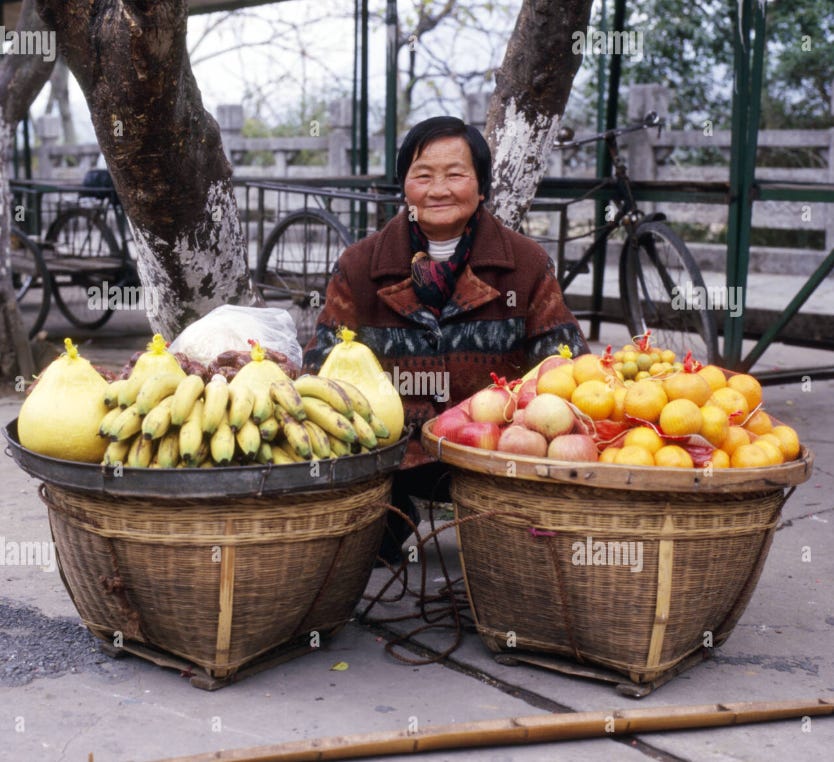
And this isn’t only happening to me, I notice it when I shop too. I’m on Etsy constantly squinting at “maker” accounts wondering if there’s an actual person with actual hands behind it, or a scam account running the same fake-handmade script a thousand times over. I’m sifting through the same fogginess everyone else is. So when someone walks into my shop bracing for a pitch, I don’t take it personally. I recognize the posture. It’s mine too sometimes on the other side of a checkout page.
But what I keep coming back to is this: if every honest seller gets lumped in with every dishonest one, then cynicism is the only sane response left, and the people actually doing this with care, actually researching and testing and curating because they love it, get punished right alongside the ones who never did. We didn’t leave room for the difference. I don’t know how we build that room back. I just know I’d rather keep telling you the true thing and let you feel however you feel about it, than go quiet and stop sharing what I find.
Underneath all of it is vulnerability. To share something, whether it's a chair I found or a reflection I’ve had, is to say I noticed this, I made this, I think it matters, and then stand there while other people decide if a) they agree or b) they’ll judge you for it. Selling is just the medium our particular society has built for that exchange to happen in, the shape that sharing has been forced to take in order to survive here. But the courage was never really about the transaction part. It was always about being witnessed while wanting something (ourselves) to be seen.
If you’ve ever felt that flinch, in my shop or anywhere else, tell me. I want to know what it feels like for you.
(always) onward,
Sara Elise
Process IS real. Powerful article Sara thank you